
What Is Marine Engineering Career Path, Salary, Jobs & Future Scope
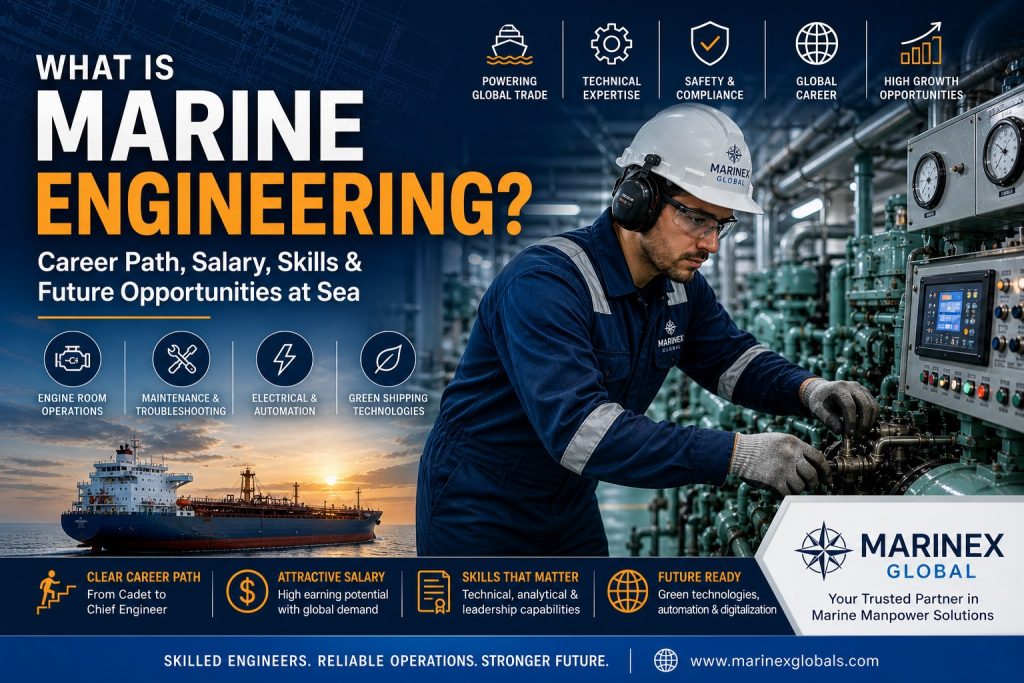
The global shipping industry depends on highly skilled professionals to keep vessels moving safely and efficiently. Among the most important of these professionals are marine engineers. If you are searching what is marine engineering, this complete guide explains the profession, career opportunities, salary potential, courses, and future demand in 2026.
Marine engineering is one of the most respected technical careers in the maritime world. It offers excellent income, international exposure, long-term growth, and opportunities to move into senior shore-based roles later in life.
For shipowners and ship managers, qualified marine engineers are essential for vessel performance, safety, fuel efficiency, and compliance. For seafarers, it is a rewarding pathway toward becoming a Chief Engineer and building a successful maritime career.
What Is Marine Engineering?
Marine engineering is the branch of engineering that focuses on the design, operation, maintenance, and repair of machinery used on ships, offshore vessels, and marine structures.
It covers:
- Main propulsion engines
- Auxiliary engines and generators
- Boilers and pumps
- Fuel systems
- Steering gear
- Refrigeration and HVAC
- Ballast systems
- Electrical power systems
- Fire safety systems
- Automation and monitoring systems
Simply put, marine engineers are responsible for everything that keeps a vessel operational.
When people ask what is marine engineering, the simplest answer is: it is the engineering discipline that powers global shipping.
What Does a Marine Engineer Do?
A marine engineer works mainly in the ship’s engine room and technical spaces. Their duties depend on rank, vessel type, and company operations.
Common Responsibilities:
- Operating ship engines and generators
- Monitoring engine room performance
- Preventive maintenance of machinery
- Repairing pumps, compressors, purifiers, and motors
- Fuel management and bunkering support
- Pollution prevention compliance
- Spare parts inventory control
- Preparing maintenance reports
- Assisting during inspections and audits
- Troubleshooting technical failures at sea
Marine engineers solve complex mechanical and electrical issues in real operating conditions, often far from shore support.
Marine Engineer Career Path
One of the strongest advantages of this profession is a clear promotion structure. The marine engineer career path allows candidates to progress through experience, exams, and sea service.
Typical Rank Progression:
Engine Cadet → Junior Engineer → 4th Engineer → 3rd Engineer → 2nd Engineer → Chief Engineer
Promotion depends on:
- Sea service time
- Certificate of Competency exams
- Technical ability
- Leadership skills
- Company vacancies
- Performance onboard
Many professionals reach Chief Engineer level within 8 to 12 year
How to Become a Marine Engineer ?
If you want to enter this profession, there are several recognized pathways.
Marine Engineering Courses
- B.E. Marine Engineering
- B.Tech Marine Engineering
- Maritime Academy Diploma Programs
- Graduate Marine Engineering (GME) for mechanical engineers
Required Certifications
- STCW Basic Safety Training
- Medical Fitness Certificate
- Watchkeeping Qualifications
- National / Flag State CoC Exams
Many students search for marine engineering courses because this remains one of the best technical maritime careers worldwide.
Marine Engineering Salary
The marine engineering salary depends on rank, vessel type, company, nationality, and experience. Specialized ships usually offer higher wages.
| Rank | Monthly Salary (USD) |
|---|---|
| Engine Cadet | $500 – $1,500 |
| 4th Engineer | $2,500 – $4,000 |
| 3rd Engineer | $4,000 – $6,000 |
| 2nd Engineer | $6,000 – $10,000 |
| Chief Engineer | $9,000 – $18,000+ |
.
Chief Engineer Salary Ship Sector
Many people search chief engineer salary ship because it is one of the highest-paid seafaring positions. On LNG carriers, offshore vessels, FPSOs, and advanced fleets, earnings may exceed standard cargo ship packages.
Accommodation and meals are usually provided onboard, increasing effective income.
Marine Engineer Jobs in Global Shipping
There is steady demand for marine engineer jobs across the world due to fleet expansion, retirements, and modern technical requirements.
Common Vessel Opportunities:
- Container Ships
- Bulk Carriers
- Oil Tankers
- Chemical Tankers
- LNG / LPG Carriers
- Offshore Support Vessels
- Cruise Ships
- Dredgers
- FPSOs
- DP Vessels
Many candidates also search shipping jobs for engineers and merchant navy engineering jobs because these sectors offer strong salaries and career growth.)
Ship Engine Room Jobs
The engine department has several positions, making ship engine room jobs attractive for new and experienced seafarers.
Common Engine Department Roles:
- Engine Cadet
- Wiper / Oiler
- Electro Technical Officer (ETO)
- Electro Technical Rating (ETR)
- Engine Fitter
- Motorman
- Junior Engineer
- 4th Engineer
- 3rd Engineer
- 2nd Engineer
- Chief Engineer
Each level offers technical learning and promotion potential.
Skills Needed to Succeed
Top marine engineers combine practical and leadership skills.
Important Skills:
- Mechanical troubleshooting
- Basic electrical knowledge
- Engine maintenance planning
- Automation awareness
- Safety discipline
- Teamwork
- Communication
- Problem-solving under pressure
- Time management
- Leadership
Shore-Based Jobs After Sea Career
Marine engineering offers strong long-term options after sailing years.
Shore Opportunities:
- Technical Superintendent
- Fleet Manager
- Drydock Superintendent
- Marine Surveyor
- Port Engineer
- Engine Manufacturer Service Engineer
- Maritime Recruiter
- Safety Manager
- Technical Consultant
This is why many consider marine engineering a lifetime profession.
Marine Engineering Future Scope in 2026 and Beyond
The marine engineering future scope remains very strong as shipping enters a new technological era.
Growth Areas:
- LNG propulsion systems
- Methanol fuel engines
- Hybrid and electric vessels
- Emission control systems
- Digital diagnostics
- Fuel efficiency retrofits
- Remote monitoring systems
- Smart vessel automation
Engineers trained in green shipping technologies will remain in high demand.
Why Shipowners Need Quality Marine Engineers
TFor shipowners and ship managers, hiring skilled engineers means:
- Lower breakdown risk
- Better fuel performance
- Safe operations
- Faster troubleshooting
- Stronger compliance record
- Better drydock planning
- Reduced operating costs
Reliable technical manpower is a competitive advantage.
Why Seafarers Choose Marine Engineering
- Strong earning potential
- Global job market
- Promotion to Chief Engineer
- Rotation leave system
- Tax benefits in many jurisdictions
- Long-term shore career opportunities
This makes it one of the best marine engineer jobs globally.
Final Thoughts
If you were searching what is marine engineering, the answer is clear: it is a high-value, future-ready career that powers world trade.
Marine engineering combines technical skill, global opportunities, excellent salary potential, and long-term career growth. Whether you aim to become an Engine Cadet or reach Chief Engineer level, this profession remains one of the best choices in shipping.
For shipowners, competent marine engineers protect vessel performance and profitability. For seafarers, it can build a secure and successful future..
Need Qualified Marine Engineers or Crew Recruitment Support?
Marinex Global provides professional crew sourcing, screening, and manpower solutions for shipowners, ship managers, and offshore clients worldwide.